

ADHD overwhelm isn’t a sign that you’re lazy or incapable. If you’re wondering why you get overwhelmed so easily with ADHD, executive functioning can make it harder to organise tasks, choose what matters first and get started. When demands pile up, even a small task can feel like too much.
You might know what needs doing and still feel stuck. That gap can widen when a deadline feels far away, a task offers no immediate reward, or noise and competing demands make it harder to think clearly.
This article explains how executive functioning, cognitive load and motivation can contribute to overwhelm, and why breaking a task into smaller steps may help you get started. You’ll also find practical ways to reduce demands, manage time and respond to task paralysis with more structure and self-compassion.
Key Takeaways
• Turn a large task into a small first action, such as opening the document before trying to finish it.
• Notice which emotions, environments or competing demands tend to tip you into overwhelm.
• Use visible reminders and a clear priority to reduce the mental effort of deciding what to do next.
• When your mind feels overloaded, pause and reduce incoming demands before choosing your next step.
• Make low interest tasks easier to start by adding structure or a personally meaningful reason to begin.
1. Breaking tasks into smaller steps
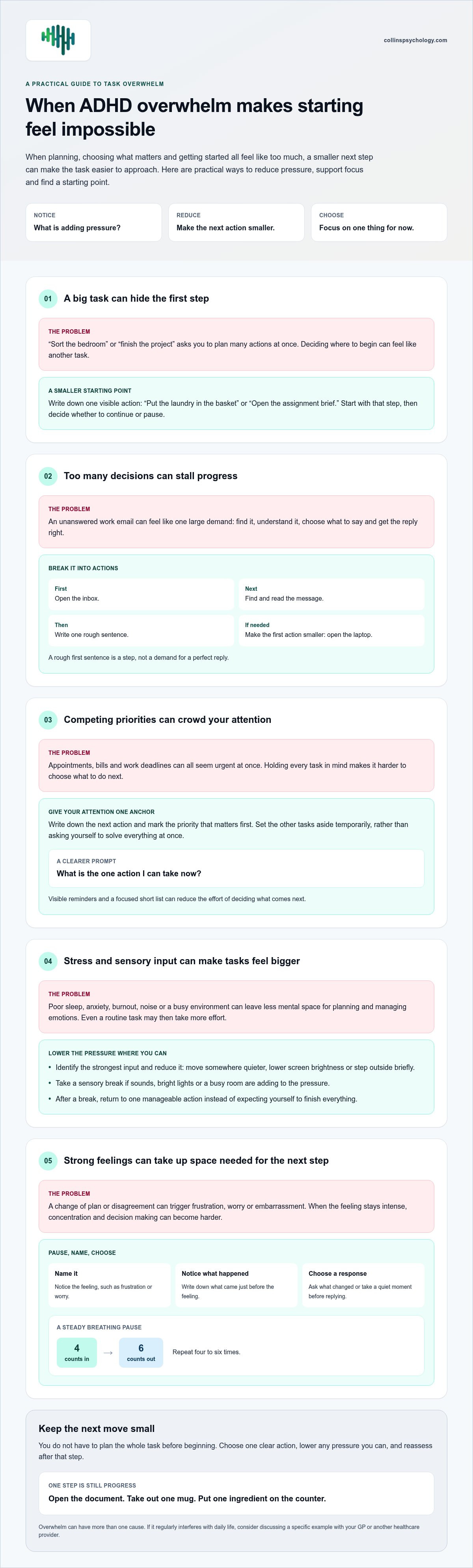
Sorting a kitchen cupboard can feel impossible when it involves several decisions: what to keep, where things belong and how to start. Choose one visible action, such as taking every mug out of one cupboard. Once that step is complete, decide whether to continue or pause. A clear starting point means you don’t have to plan the whole job before acting.
Try breaking an avoided task into a short sequence. To deal with an unanswered work email, for example, open the inbox, find the message, read it and write one rough sentence. These are separate actions, not a demand to produce a perfect reply straight away. If the first step still feels too big, make it smaller: open the laptop, then open the inbox.
Stress, poor sleep, anxiety and burnout can leave you with fewer mental resources for planning, prioritising and managing emotions. After a restless night, for instance, even a routine form may feel harder because deciding what to do first takes more effort.
At home, work or school, write down the next action rather than a broad goal. “Put the laundry in the basket” gives you a clearer starting point than “sort the bedroom”; “open the assignment brief” is more actionable than “finish the project”. A short list can help, but keep it focused on the task in front of you. If priorities compete, mark the one that matters first and set the others aside temporarily.
Regular breaks are part of managing your effort, not proof that you have failed to focus. After completing one step, stand up, drink water or stretch before moving on. If sounds, bright lights or a busy room add to the pressure, take a sensory break somewhere quieter. Noise-reducing headphones may help at a desk, while stepping outside can offer a change from a crowded environment.
When your body feels tense, pause before trying to solve everything at once. Try breathing in for four counts and out for six, repeating the exercise four to six times. Another option is to write down what is making you feel overwhelmed, then identify one thing you can act on now. A structured CBT approach to emotional regulation can help you notice the link between pressure, thoughts and actions.
After a break, return to one manageable step rather than expecting yourself to finish everything. If preparing dinner feels like too much, for example, put one ingredient on the counter and reassess. This makes progress easier to see and gives you a practical response when stress or sensory input makes a task feel bigger.
2. What Causes ADHD Overwhelm?
Overwhelm can occur alongside ADHD, but feeling overwhelmed on its own doesn’t establish an ADHD diagnosis. Stress, anxiety, poor sleep and burnout can also make everyday demands harder to manage. A difficult workday followed by a noisy commute, for example, may leave you with less capacity for a simple evening task.
Emotional dysregulation means finding it difficult to manage the intensity or duration of emotions. A disagreement about household plans can trigger a strong reaction that takes time to settle, even after the conversation ends. The feeling may then affect your concentration, patience and next decision. With ADHD, this can snowball: strong emotions take up mental space, other tasks slip, and those difficulties add pressure.
Notice when the emotional load starts to rise. Name the feeling, such as frustration, worry or embarrassment, and write down what happened just before it. A short note might say, “The plan changed at work, and I felt angry because I’d prepared for the original task.” This CBT-style pause helps separate the situation from your interpretation, so you can choose a response, such as asking what has changed or taking a quiet moment before replying.
Sensory overload can add another layer. Bright lights, overlapping sounds, strong smells, physical discomfort or a busy setting can make it harder to process what’s happening around you. An open-plan office, crowded supermarket or loud family gathering may feel difficult because several inputs compete for attention. If you notice yourself becoming tense or irritable, identify the strongest input and reduce it where possible: move somewhere quieter, lower your screen brightness or step outside briefly.
For example, after a busy supermarket trip, you might need a few quiet minutes before making dinner plans. That pause isn’t avoidance if it helps you return with a clearer next step. Some people find that CBT, coaching or practical emotional regulation strategies help them spot patterns and practise responses. An emotional regulation approach for adults with ADHD can help connect feelings, triggers and actions.
In Ireland, speak with your GP or another healthcare provider if overwhelm happens regularly and interferes with daily life. Describe a specific example, such as repeatedly shutting down after work or struggling to manage everyday plans. If you’re unsure what to say, note the situation, the emotions you noticed and what became difficult. This record can help you explain the pattern and discuss useful next steps.
Emotional dysregulation is increasingly recognised as a core feature of ADHD. Overwhelm can involve feeling flooded by emotions, information or stimuli that are hard to sort or prioritise. It may arise during disagreements, before important events or changes, or amid burnout. Sensory overload can affect people with ADHD, especially those who are also autistic.
3. Task overwhelm and executive dysfunction
Executive functions are the mental skills used to plan, prioritise, manage time, begin tasks and shift between demands. ADHD can affect these skills, so you may understand what needs doing but struggle to organise the steps. Planning a busy month, for example, can mean juggling appointments, bills and work deadlines at once. When every decision seems to demand attention, competing tasks can understandably feel overwhelming.
This isn’t simply a matter of trying harder. The prefrontal cortex supports many executive functions, and it develops and functions differently in ADHD brains. This can make it harder to hold a plan in mind while acting on it. You might intend to book a GP appointment, then get sidetracked before finding the phone number. The intention is there, but the steps don’t always follow.
Deadlines can create pressure in an unexpected way. A project due weeks away may feel abstract, so it doesn’t create enough urgency to get started. As the deadline approaches, the task can suddenly feel immediate and anxiety may rise. You might postpone gathering receipts until a form feels urgent, then struggle to sort them alongside other responsibilities. This shift can lead to rushed work or shutdown.
When several tasks compete, use external structure rather than trying to keep every reminder in your head. Write a short list, mark the current priority and use a timer or calendar alert to cue your next action. If laundry, emails and shopping all need attention, group similar tasks instead of switching between them. A visible plan makes the next step easier to find when your attention shifts.
Starting a task can remain difficult even when it matters to you. If competing demands leave you feeling stuck, consider whether the first action is clear and easy to access. Open the document, place the relevant form on your desk or ask someone to sit nearby while you begin. Working alongside another person, even quietly, can provide useful structure. A task-initiation strategy can help you identify what makes starting harder and test a practical adjustment.
Notice what happens just before you lose your place. Perhaps a new message interrupts budgeting, or an unclear instruction sends you to an easier task. Note the trigger and choose one adjustment for next time, such as silencing notifications during focused work or asking someone to clarify the first priority. These observations turn executive function challenges into specific problems you can plan around, rather than personal failures.
4. Cognitive load and shutdown
Cognitive load is the mental effort involved in holding information, making decisions and responding to demands. ADHD, or attention deficit hyperactivity disorder, can make it harder to organise competing information. Imagine preparing a work presentation while answering messages and remembering an appointment. Each demand claims attention, making it harder to shape the presentation into a clear next action.
This can happen during brainstorming, learning a new topic or weighing a financial decision. Comparing household bills, for example, involves remembering costs, dates and account details while considering what to change. If those details stay in your head, deciding may feel impossible. Writing each option on paper or in a notes app moves some of that mental effort into your environment.
Emotional overwhelm can add to cognitive load. A tense conversation may leave you replaying what was said while trying to finish an ordinary task, such as preparing lunch. Strong feelings occupy attention, making the task seem more complicated than it did before the conversation. Notice what’s taking up mental space, then name it: “I’m still thinking about that conversation, and I need to send this message.”
Sometimes overload leads to shutdown: you may feel unable to choose, reply or act. This can look like staring at an unfinished form, avoiding a phone call or going quiet during a discussion. These are experiences, not personal failings. Rather than demanding that you solve everything immediately, pause and identify the smallest decision in front of you.
Try a brief written reset when this happens. First, record the demands competing for your attention, such as “reply to Aoife, check the bill, prepare slides”. Next, separate what needs action now from what can wait. Finally, choose one task and identify its first physical action, such as opening the bill or drafting a reply. This sequence can reduce the number of decisions you’re trying to hold at once.
A CBT approach can help you examine the thought that makes a situation feel unmanageable. If the thought is “I have to fix all of this tonight”, ask whether that’s a fact or an all-or-nothing rule. Replace it with a realistic action, such as “I’ll check the bill now and plan the next step tomorrow”. This won’t remove every demand, but it gives your attention a clearer direction.
Repeated overload may also signal that your current demands exceed your available capacity. If a new project at work triggers shutdown, clarify its priorities and write down what can be postponed. If family plans, appointments and admin compete, put them in one external calendar rather than relying on memory. The aim isn’t to function perfectly, but to make the next decision easier to see.
5. Dopamine, motivation and interest-based tasks
Dopamine is involved in motivation, reward and attention. With ADHD, routine tasks without an immediate or meaningful reward can be harder to start, even when they matter. You might enjoy planning a family day out but avoid the follow-through, such as checking opening times or packing a bag. This contrast can feel confusing, particularly if you’ve only recently recognised ADHD patterns in your life.
Interest, novelty, urgency, challenge and personal meaning can make a task more engaging. Try connecting a necessary task to a clear goal. If you want to improve your fitness, for example, make the first step putting your walking shoes by the door. If you’re parenting, a shared checklist for school mornings can make the routine easier to follow without relying on memory alone.
Infographic: Make a task easier to engage with
Choose
Name one task you want to begin.
Connect
Write why it matters to you.
Shape
Add a cue, a choice or a fresh approach.
Review
Notice what helped you start.
Motivation can also be affected by how a task feels emotionally. If a message brings up rejection sensitivity, you might put off replying because you’re worried about how it will be received. Write a neutral first draft, then return to it after a pause. This gives you a small, specific action without requiring you to resolve every feeling before you begin.
Use goal setting to make progress visible. Instead of “get fit” or “sort school admin”, choose an action you can see, such as booking one class or putting one permission form in your bag. A goal works better as a prompt for action than as a judgement of your character. If you miss the planned moment, choose another cue and restart without treating the delay as proof that you can’t follow through.
When a task feels flat, try a change that adds interest without adding extra demands. You could listen to a familiar playlist while preparing tomorrow’s lunches or choose a different walking route. Afterward, note whether the change helped you focus or get started. These observations can help you shape routines around what engages you, rather than waiting for the right mood.
ADHD motivation is often interest-based: novel, urgent, challenging or personally meaningful tasks may be more engaging. Use this as a design prompt. Before starting, ask which quality you could bring into the task in a manageable way. A routine job might feel more novel if you change the order, more challenging if you set a small target, or more meaningful if you connect it to someone or something you care about.
Keep the adjustment modest. You might choose between two ways to begin, add a brief time limit or pair the task with a clear personal purpose. If urgency helps, create a gentle prompt to get started rather than waiting until pressure becomes overwhelming. Notice which quality made the task easier to approach, and reuse that insight for similar tasks. The aim isn’t constant enthusiasm, but a first step that feels more engaging and specific.
Collins Psychology: CBT Programs for Adult ADHD
Collins Psychology offers CBT programmes for adults with ADHD who feel overwhelmed or stuck. The Adult ADHD Foundations Program™ provides structured, online, self paced tools for daily functioning, including practical ways to approach executive functioning and emotional regulation. It is designed to fit around real life and is not a substitute for therapy.
If task paralysis, difficulty following through or emotional overwhelm keep disrupting your routines, structured CBT strategies can help you practise different ways of responding. The focus is on building practical systems to support daily life, not on expecting yourself to work like someone without ADHD.
Explore the Adult ADHD Foundations Program™ to see whether its approach suits your needs, or visit Collins Psychology to learn more.
Choose one change to carry forward
Understanding why you get overwhelmed so easily with ADHD can help you respond with curiosity rather than self-blame. The next step doesn’t need to be a complete life overhaul. Choose one recurring point of friction, notice what happens before you get stuck, and test one practical adjustment. A calendar reminder, written prompt or planned pause gives you something concrete to learn from.
If overwhelm continues to affect your daily life, structured online support may help you develop approaches that fit your routines and priorities. Collins Psychology’s Adult ADHD Foundations Program™ is self paced, designed to fit around real life, and offers practical tools for daily functioning. It isn’t a substitute for therapy, but it can be a way to practise new systems at your own pace.
You don’t have to wait until everything feels manageable before taking a first step. Start with one small adjustment and build systems that work with your ADHD brain.
Frequently Asked Questions
What Causes ADHD Overwhelm?
Overwhelm can build when several demands arrive together and you’re unsure which needs attention first. An unexpected work message, for instance, may interrupt plans to prepare dinner and remember an appointment. Try writing down the demands, then mark what genuinely needs action today. This can help separate the immediate task from everything else competing for your attention.
How does ADHD affect emotional regulation and sensory processing?
Strong emotions or competing sensory input can make it harder to stay present and respond deliberately. During a busy meeting, you might lose track of the conversation while worrying about how your comment sounded. Notice one early cue, such as tension or distraction, and change one thing: jot down your next point, reduce background noise or pause before replying.
What is executive dysfunction in ADHD, and how does it contribute to overwhelm?
Executive dysfunction involves difficulty using mental skills such as planning, prioritising, starting and tracking tasks. Renewing an insurance policy might involve finding documents, comparing options and completing forms, all of which can feel like one large job. Write down the next action, such as locating the policy email, and add a reminder for the step that follows.
What ADHD treatments can reduce overwhelm, including medication and therapy?
CBT, coaching and therapy can help you identify overwhelm triggers, practise emotional-regulation strategies and build practical systems suited to your needs.
Medical and Mental Health Disclaimer
The information provided on this page, in the Adult ADHD Foundations Program™, individual Collins Psychology programs and the Adult ADHD Reflection Quiz is for general educational and informational purposes only and is not a substitute for individual medical, psychological or psychiatric assessment, diagnosis or treatment. These resources do not diagnose ADHD or any other condition and are not psychotherapy, counselling, crisis support or personalised treatment. Although the material is psychologist-developed and informed by psychological research and evidence-based approaches, individual outcomes will vary and no specific result can be guaranteed. If you are experiencing severe or worsening psychological symptoms, significant impairment, thoughts of harming yourself or another person, or concerns about your safety, seek support from an appropriately qualified health professional or contact the emergency or crisis service appropriate to your location.